
Introduction

Studying in Canada is a dream for a lot of medical aspirants because it offers a lot of opportunities for the Students. But International students mainly wonder whether they can work while studying or not. In this blog, we will explore the possibility of working while studying medicine in Canada. It will help you understand the regulations and requirements.

Can International students work while studying?

Yes, If your study permit allows you to work on or off-campus, you may be able to work in Canada while studying. However, you must meet all the requirements and can only start working when your study program begins, not before.

There are some situations where you can work in Canada.

Work On & Off Campus

If you have a study permit, you may work on-campus and off-campus without getting a work permit. You need to fulfil the requirements before even finding a job.

If your study permit includes a condition that permits you to work on- or off-campus, you can work as an international student in Canada.

On-campus requirements –

You can work on campus without a work permit if you are –

  • full-time post-secondary student
  • have a valid study permit
  • have a Social Insurance Number (SIN)

Off-campus requirements –

You can work on campus without a work permit if you are –

  • you’re a full-time student at a designated learning institution (DLI)
  • you’re enrolled in a post-secondary academic, vocational or professional training program
  • your study program is at least 6 months long and will provide you with a degree, diploma or certificate.
  • You have a Social Insurance Number (SNI) (A SIN is a 9-digit number that the Government of Canada gives)

Work as Co-ops & Interns

If your study program includes a mandatory co-op or internship placement, you will need to obtain a work permit. And to apply you need to fulfil below requirements –

  • Have a valid study permit.
  • Working is necessary to complete your study program in Canada.
  • Your school provides a letter confirming that all students in your program need to do work placements to earn their degrees.
  • The co-op placement or internship makes up 50% or less of your study program.

Work after the Graduation

After you graduate, if you want to work in Canada, you will need a work permit. The work experience you gain while working can also be beneficial as it may help you become eligible for permanent residence in Canada.

Work Conditions and Restrictions

If you have the opportunity to work in Canada, make sure to follow the rules and limitations specified in your study permit. It's crucial to stick to the permitted work hours and meet any other conditions mentioned in your permit to avoid any problems while you are in Canada.

Balance work with studies

While thinking about working while studying medicine, remember to focus on your studies first. Medical education requires dedication, so balance your work and academic responsibilities for a successful journey.

Conclusion

Studying medicine in Canada is an amazing chance, and working while studying can help with finances. If your study permit allows it, you can work on or off campus to support your education. Follow the permit guidelines and balance work and studies for a great experience in Canada. Best of luck on your medical career journey.

Related Blogs

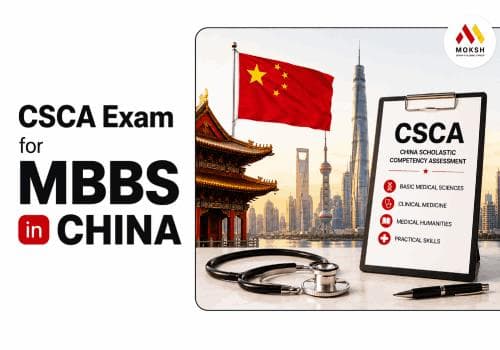
CSCA Exam for MBBS in China: Complete 2026 Guide for Indian PCB Students

CSCA Exam for MBBS in China: Complete 2026 Guide for Indian PCB Students

The CSCA exam is now mandatory for Indian PCB students applying for MBBS in China. It tests Mathematics and Chemistry - Math being the main challenge for non-Math students. The home-based test uses a dual-camera setup. Passing CSCA does not guarantee Indian licensure; NMC compliance, HSK Level 4 Mandarin, and clearing the CMQE exam are separately required. Plan early.

Deemed Medical College vs MBBS in Europe: Which Is Better for Indian Students?

Deemed Medical College vs MBBS in Europe: Which Is Better for Indian Students?

Choosing between a deemed medical college and MBBS in Europe depends on budget and career goals. Deemed colleges cost up to Rs. 1.5 crore but offer Indian clinical exposure and simpler PG prep. Europe is more affordable but requires strict NMC compliance: 54 months study, 12-month local internship, English medium, and FMGE/NExT clearance. For global careers, choose Europe; for India-focused practice, choose deemed.

Is MBBS in Uzbekistan Good After the NMC Advisory 2026?

Is MBBS in Uzbekistan Good After the NMC Advisory 2026?

Yes, MBBS in Uzbekistan remains a good option for NEET-qualified Indian students after the April 2026 NMC advisory, which is a warning - not a ban. Choose NMC-compliant universities like Bukhara State Medical Institute (47.83% FMGE pass rate). Verify WDOMS listing, English medium, and complete 12-month internship in Uzbekistan. Start FMGE prep early. Total cost: Rs.18-30 lakhs. Avoid unverified agents.

Why Is MBBS in Uzbekistan Affordable & NMC-Recognized for Indians?

Why Is MBBS in Uzbekistan Affordable & NMC-Recognized for Indians?

MBBS in Uzbekistan offers Indian students an affordable, NMC-approved pathway to a medical degree. With tuition fees ranging from Rs. 15-30 lakhs for the entire 6-year program, it's a cost-effective alternative to Indian private colleges. Graduates must clear the FMGE or NExT licensing exam to practice in India, making it a strategic choice for NEET-qualified students seeking quality international medical education without massive debt.

Top 10 Medical Colleges in Uzbekistan for Indian Students

Top 10 Medical Colleges in Uzbekistan for Indian Students

Uzbekistan is a top choice for affordable MBBS abroad, offering quality medical education to Indian students. With NMC approved universities, English-medium instruction, and low tuition fees ranging from Rs. 15-25 lakhs, it provides a cost-effective pathway. Graduates are eligible to take the FMGE exam to practice in India, making it a strategic and valuable option for your medical career.

German Visa Simplified: How Indian Students Can Study and Work in Germany

German Visa Simplified: How Indian Students Can Study and Work in Germany

Navigate the German student visa process with this 5-step roadmap for Indian students. Begin by securing your mandatory APS certificate and university admission. Fulfill financial proof with a blocked account, prepare your documents, and ace the visa interview. This pathway also outlines part-time work opportunities and the route to permanent residence after graduation.

Get free counselling

Fill below details to get a call from expert career counsellor