

Have you ever dreamt of becoming a doctor but felt discouraged by the high costs or intense competition in your home country? Look no further than Russia! Russia offers a fantastic opportunity for international students to pursue MBBS degrees at a fraction of the cost and with a streamlined admissions process.
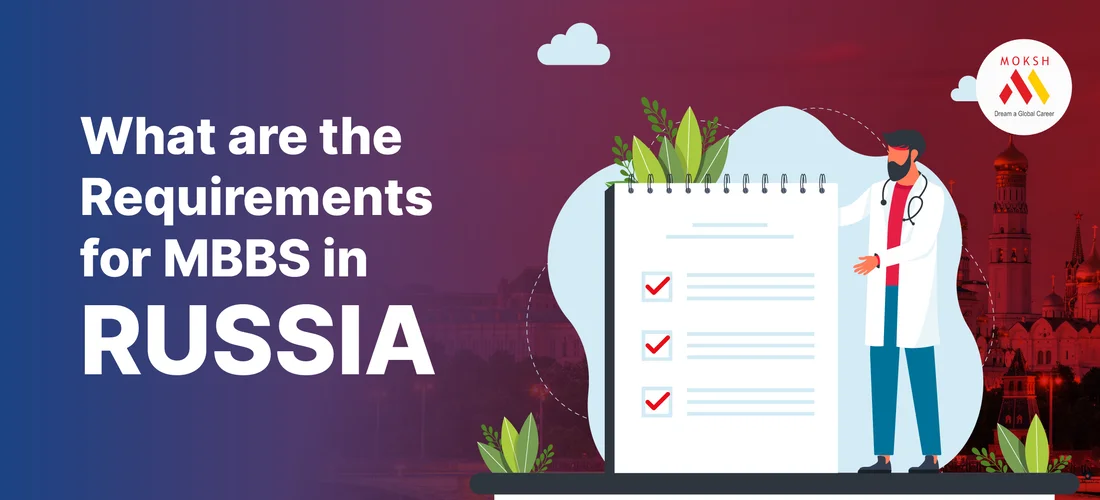
But before you pack your bags and head to Moscow, it's crucial to understand the requirements for MBBS in Russia. This blog will guide you through everything you need to know to qualify for this exciting academic journey.

Why Russia?
Russia is the most popular country for excellence in medical education, boasting some of the world's oldest and most reputable medical universities. Many of the institutions are globally recognised and accredited by international medical bodies such as the WHO and the Medical Council of India. Moreover, the cost of education in Russia is relatively lower compared to other popular destinations for medical studies, such as the United States or the United Kingdom.
Requirements for MBBS in Russia
Educational Qualifications:
- You must have completed your higher secondary education (10+2) with Physics, Chemistry, Biology, and English as core subjects.
- Ensure your academic qualifications meet the standards specified by Russian medical universities.
Entrance Exams:
- Many Russian universities require international students to clear entrance exams such as the NEET or other equivalent exams.
- Prepare rigorously for these exams to secure admission to your desired medical university in Russia.
Language Proficiency:
- Since most medical courses in Russia are taught in Russian, you may need to demonstrate proficiency in the language.
- Some universities may offer programs in English, but a basic understanding of Russian is often required for communication with patients during clinical rotations.
Documentary Requirements:
- Prepare necessary documents such as academic transcripts, passport copies, birth certificates, and medical certificates.
- Ensure all documents are attested and translated into Russian, as per the university's requirements.
Medical Fitness:
- As you'll be pursuing a medical career, being in good health is imperative.
- Some universities may require your medical fitness certificate just to check your physical health and ability to handle the demands of the course.

Eligibility Criteria
Are you thinking of pursuing an MBBS in Russia? It's a fantastic choice! But before you embark on this exciting journey, remember to check the eligibility criteria you need to fulfil.;
Age Limit:
- Most universities have a minimum age requirement of 17 years for admission.
- There's generally no upper age limit for pursuing an MBBS in Russia.
Academic Performance:
-
Maintain a good academic record throughout your schooling years, as some universities may have minimum GPA requirements for admission.
Visa Requirements:
- Apply for a student study visa in Russia. (The university will extend your visa for 100 USD.)
- Fulfil all the visa requirements, including proof of sufficient funds to pay your tuition and living fees.
Financial Capacity:
- Ensure you have the financial means to cover tuition fees, room rent, and other living expenses for the duration of your course.
The Admissions Process
The admission process for MBBS in Russia is generally simpler than in other destinations. Here's a simplified breakdown:
- Research and Choose Your University: Russia boasts over 50 universities offering MBBS programs recognised by the MCI. MOKSH offers only English-language universities. Select your university using the MOKSH Career Planner app.;
- Gather Required Documents: Ensure you have all the necessary documents scanned and ready for online application.
- Apply Online: Go to the MOKSH Portal, fill in the required fields, fill out the application form, and submit it with the required documents. Alternatively, you can connect with MOKSH experts, who will help you complete the necessary application in easy steps.
- Selection Process: The university will shortlist candidates for admission based on their academic qualifications and the completeness of their applications.;
- Visa Application: Once accepted, you must apply for a student visa to study in Russia.;
Documents Required
- Scanned documents of Class 10th and 12th mark sheets and pass certificates
- NEET results/admit card
- Passport-sized photographs
- A scanned copy of your passport
- Age and identity proof (Aadhar card or PAN card)
Important Points to Remember
- Medium of Instruction: While some universities offer MBBS programs in English, Russian is the primary language of instruction in most institutions. Consider taking an introductory Russian language course to enhance your learning experience.
- Cost of Education: MBBS programs in Russia are significantly cheaper compared to Western countries. The tuition fees range from 1.8 lakhs to 8.5 lakhs per year, making it a cost-effective option.
- MCI Recognition: Ensure the university you choose is recognised by the MCI for your degree to be valid for practising medicine in India after completing your studies and clearing the mandatory screening test (FMGE).
Conclusion
Studying MBBS in Russia can be a rewarding experience, offering a high-quality medical education at an affordable cost. By understanding the eligibility and application process, you can take one step towards achieving your medical career goals in a land of rich history and cultural wonders. Remember to research thoroughly and consult with study abroad consultancy experts to make informed decisions regarding your medical education in Russia. Good luck!
.png&w=640&q=75)