

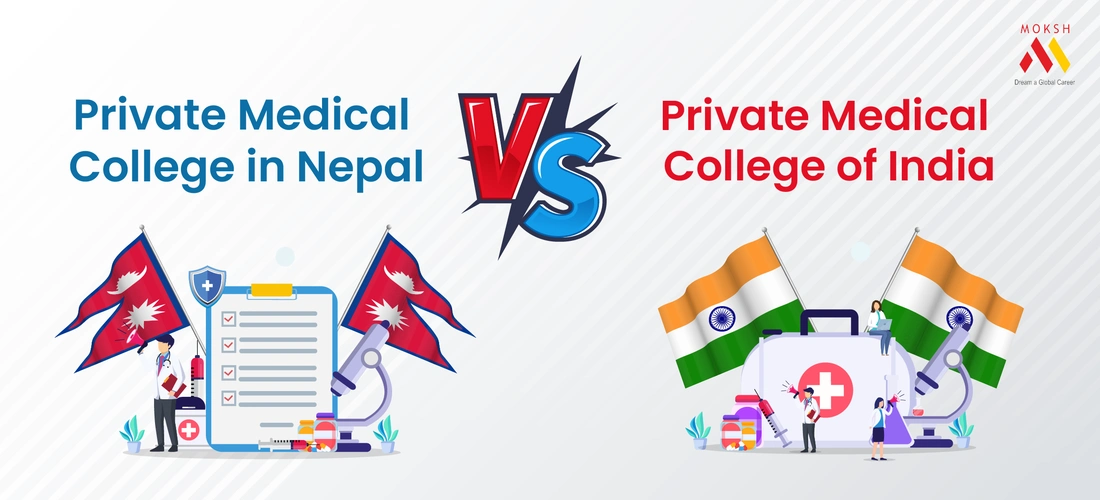
In recent years, pursuing a medical education has become increasingly competitive and sought after in South Asia. Aspiring medical professionals often weigh their options between private medical colleges in neighbouring countries like Nepal and India. Both nations boast reputable institutions, but each offers distinct advantages and challenges.
In this comprehensive guide, we'll compare private medical colleges in Nepal and India, exploring various aspects such as infrastructure, curriculum, faculty, accreditation, cost, and opportunities.
Infrastructure and Facilities
Nepal
In recent years, private medical colleges in Nepal have made significant strides in improving infrastructure and facilities. Many institutions offer modern classrooms, well-equipped laboratories, and access to essential resources for medical education. However, some colleges may face challenges maintaining state-of-the-art facilities due to limited funding and resources.
India
Private medical colleges in India generally have superior infrastructure to those in Nepal. Many institutions boast advanced medical equipment, spacious campuses, and world-class facilities. With substantial investments from private investors and corporate entities, Indian medical colleges often provide students with a conducive learning environment and access to cutting-edge technology.
Here's a quick table summary:
| Factor | Nepal | India |
|---|---|---|
| Cost | Lower | Higher |
| Competition | Less Competitive | High Competitive |
| Language of Instruction | English | English or Hindi |
| Degree Recognition | Requires additional licensing exams for some countries | Globally Recognized |
| Living Expenses | Lower | Varies depending on city |
Curriculum and Education Standards
Nepal
Medical education in Nepal follows a curriculum set by the Nepal Medical Council (NMC). The curriculum typically includes pre-clinical, para-clinical, clinical subjects, practical training, and internships. While the standards generally align with international guidelines, there may be variations in teaching methodologies and emphasis on research and practical skills across different colleges.
India
Medical education in India is governed by the MCI or the National Medical Commission (NMC), depending on recent regulatory changes. Indian medical colleges adhere to a comprehensive curriculum covering various medicine and surgery disciplines. The emphasis on research, clinical exposure, and practical training is often robust, preparing students for the challenges of modern healthcare.
Faculty and Expertise
Nepal
Private medical colleges in Nepal strive to attract qualified faculty members with diverse expertise. While some institutions may have renowned professors and experienced clinicians on their staff, others may face challenges in recruiting and retaining top talent due to competition with government institutions and overseas opportunities.
India
Private medical colleges in India often boast a highly qualified and experienced faculty including reputed doctors, researchers, and academicians. Many professors actively participate in cutting-edge research and clinical practice, offering students invaluable insights and mentorship. The abundant talent pool and resources provide a rich learning experience in Indian medical colleges.
Accreditation and Recognition
Nepal
The Nepal Medical Council (NMC) regulates private medical colleges in Nepal and oversees accreditation and recognition processes. While some colleges may have obtained accreditation from reputable international bodies, others may still be in the process of meeting stringent quality standards. Prospective students should research the accreditation status of their desired institution to ensure quality education.
India
Private medical colleges in India undergo accreditation processes by bodies like the MCI or the National Medical Commission (NMC). Accreditation from these authorities ensures that institutions meet predefined standards of infrastructure, faculty, curriculum, and clinical exposure. Recognition from these regulatory bodies adds credibility to the education imparted by Indian medical colleges.
Cost of Education
Nepal
Generally lower tuition fees compared to India. You can expect an MBBS in Nepal to cost between $75,000 - $100,000 USD for the entire program.
India
Fees vary significantly depending on the college's reputation and location. However, they are often higher than Nepal, ranging from $100,000 USD upwards.
Have a look below at the table for Nepal VS India Cost
| Aspect | MBBS Cost in Nepal | MBBS Cost in India |
|---|---|---|
| Tuition Fees | Typically lower than in India | Varies widely depending on the college |
| Government Quota | Lower fees in government colleges | Subsidized fees in government colleges |
| Private Colleges | Moderate to high tuition fees | Higher tuition fees in private colleges |
| Living Expenses | Moderate | Varies depending on location |
| Scholarships | Limited availability | Available in some colleges |
| Loan Options | Limited options | More accessible loans available |
Opportunities and Career Prospects
Nepal
Graduates from private medical colleges in Nepal have opportunities to pursue further education, clinical practice, or research within the country or abroad. While the healthcare sector in Nepal is growing, it may still face challenges in terms of infrastructure, technology, and specialist healthcare services. Graduates may need to explore opportunities beyond traditional clinical practice to maximize their career prospects.
India
Indian medical colleges offer a plethora of opportunities and career pathways for graduates. With a vast and diverse healthcare system, graduates can explore fields such as primary care, specialized medicine, research, public health, and medical education. Additionally, India's burgeoning medical tourism industry presents lucrative prospects for professionals with specialized skills and expertise.
Additional Considerations:
- Living Expenses: Nepal generally has a lower living cost than major Indian cities.
- Infrastructure and Facilities: Both countries have well-equipped medical colleges, but some top Nepal colleges have more advanced facilities.
- Clinical Rotations: Due to larger populations, exposure to a wider range of patients and diseases might be higher in some Indian hospitals.
Conclusion
Choosing between private Medical colleges in Nepal and India requires careful concern of several factors such as infrastructure, curriculum, faculty, accreditation, cost, and opportunities. While both countries offer quality medical education, each presents unique advantages and challenges. Prospective students should choose the right Study abroad consultant as many fraud agents are there to do spam.
By weighing these factors and understanding the nuances of medical education in Nepal and India, aspiring medical professionals can embark on a rewarding journey towards fulfilling their dreams of becoming healthcare leaders and making a meaningful impact in their communities and beyond.

.png&w=640&q=75)